Securing a business is a different challenge than securing a home. You have staff turnover, multiple doors, inventory and cash on site, deliveries coming and going, and the constant need to control exactly who can access which areas and when. The locks that came with the building, or that the last tenant left behind, are rarely set up for any of that. The reassuring part is that you do not need an enterprise budget to close the most common gaps. A handful of smart, well-chosen upgrades will protect your storefront and your peace of mind without overspending.
Start with an honest walk-through
Before buying anything, walk your space the way an intruder would. Check every exterior door, the back and side entrances that customers never see, the overhead or roll-up doors, windows within reach of the ground, and the door to any stockroom, office, or server closet. Note which locks feel loose, which doors do not seal, and how many keys are floating around among current and former staff. This simple survey almost always reveals that the front door everyone worries about is sturdier than the neglected back door where the real risk lives.
Master key systems for sane access control
A master key system is one of the most cost-effective upgrades a small business can make. It lets an owner or manager open every door with a single key, while individual staff keys open only the specific areas each person needs. The cashier does not need the stockroom, the stockroom team does not need the office, and the cleaning crew does not need the safe room. This both simplifies daily life and tightens security, because access is granted by role rather than by handing everyone a key to everything.
Rekey promptly after staff changes
Employee turnover is the most overlooked security risk in any small business. When a worker who held keys leaves, whether the parting was friendly or not, the affected locks should be rekeyed. Collecting a key at the door means nothing if that person had time to make a copy, and you can never be certain they did not. Rekeying is fast and inexpensive, and it is far cheaper than an after-hours loss. Build it into your offboarding routine the same way you would shut off a former employee's email.
When to consider access control and keypads
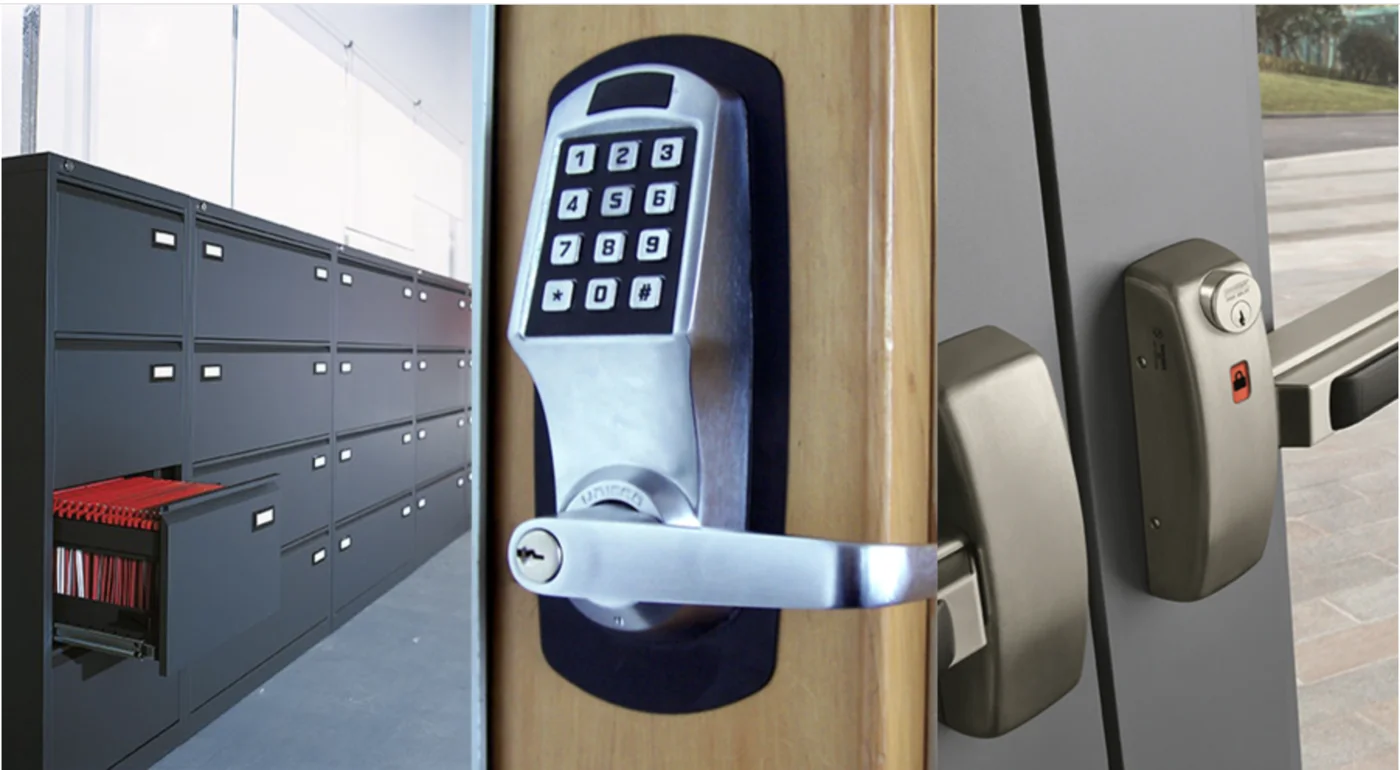
Once you are juggling many doors and a rotating staff, electronic locks and keypads can remove the headache of physical keys entirely. Codes can be issued and revoked in seconds, you can give a contractor temporary access that expires on its own, and many systems log who entered and when. If you frequently rekey because keys keep walking off, or you want a record of after-hours entries, access control often pays for itself in saved rekeys and reduced risk. It also means no more scrambling to change locks every time a key goes missing.
Do not neglect the frame, the back door, and panic hardware
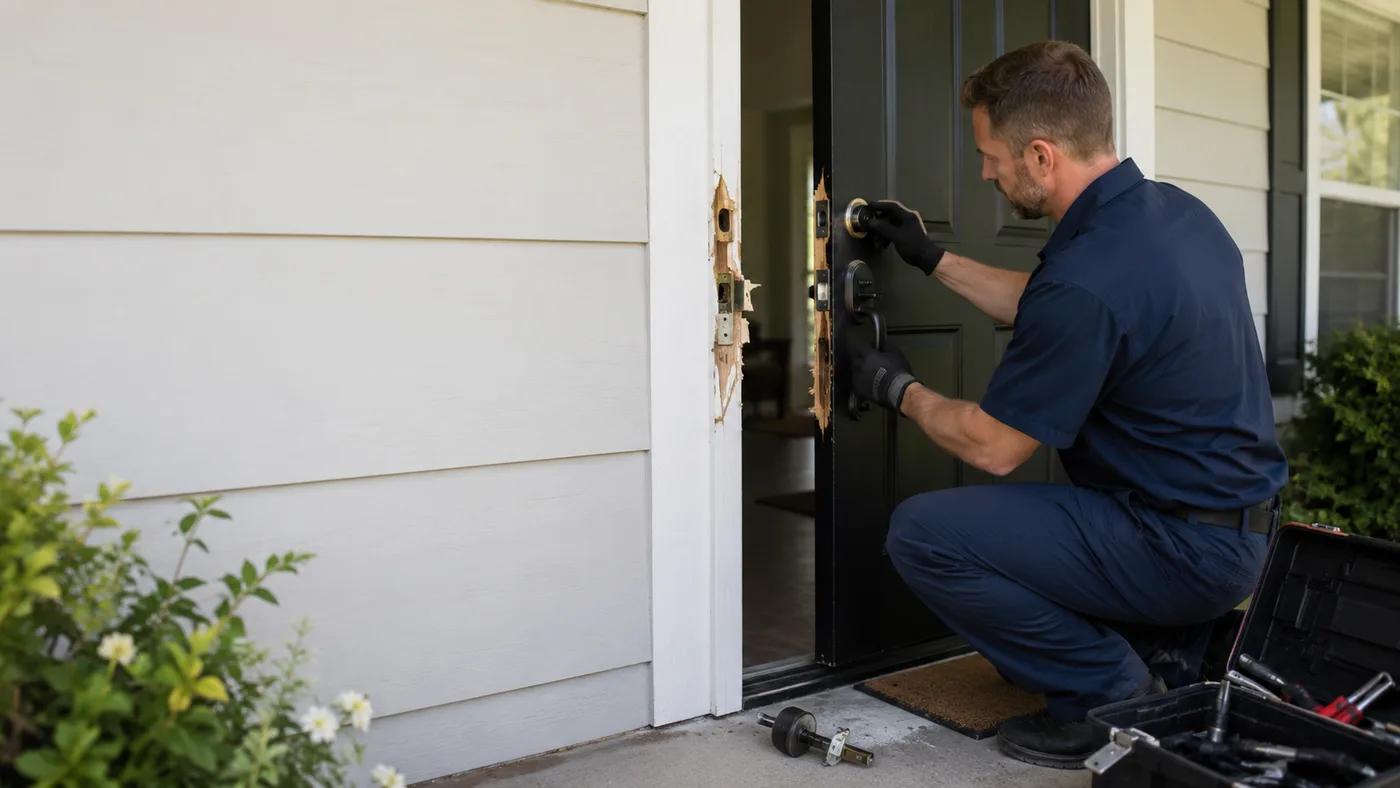
A premium lock bolted into a flimsy frame is a false sense of security. Reinforced strike plates, solid doors, and properly fitted hardware matter as much as the lock cylinder itself. Pay special attention to rear and side doors, which are out of public view and are where most forced entries actually happen. If your business has public occupancy, your exit doors may need code-compliant panic hardware that lets people out instantly in an emergency while staying locked from the outside. Getting that balance right is both a safety and a legal issue, so it is worth professional input.
Mistakes that cost owners later
The expensive errors are predictable. Owners hand out too many keys with no record of who has them, skip rekeying when staff leave, and pour money into a fancy front-door lock while a hollow back door sits on a worn strike. Others buy consumer-grade residential locks for doors that get commercial-level daily use, then wonder why they fail within a year. And many wait until after a break-in or a lockout to think about any of this, when a small planned upgrade beforehand would have prevented the loss and the downtime entirely.
Protecting businesses across Palm Beach County
Local businesses face local realities. The shops and restaurants along Clematis Street and in downtown West Palm Beach deal with heavy foot traffic and late hours, while the office parks and warehouses near I-95 and out toward Wellington and Westlake need solid after-hours security across many doors. Storefronts near the Intracoastal and along the coastal stretch from Palm Beach Gardens down to Boca Raton also fight constant salt-air corrosion that wears out hardware faster than inland. Whether you run a boutique, a medical office, a restaurant, or a warehouse, the fundamentals are the same, and getting them right protects both your stock and your staff.
You do not have to overhaul everything at once. Start with a walk-through, rekey what needs it, set up master keying, and upgrade the weak doors first. We will assess your space, recommend only what genuinely improves your security, and handle the work around your hours so you stay open. Call (561) 839-9919 to talk through a plan that fits your business and your budget, 24/7 and licensed and insured.
Frequently Asked Questions
What is a master key system and do I need one?
It lets managers open every door with one key while staff keys open only their areas. If you have multiple doors and several employees, it greatly simplifies and tightens access.
How often should a business rekey its locks?
Any time an employee who held keys leaves, and any time you cannot account for all copies. Rekeying is inexpensive insurance against unauthorized after-hours entry.
Is access control worth it for a small business?
Often, yes. If keys keep going missing or you want a log of who entered and when, electronic locks can pay for themselves in saved rekeys and added control.
What is the most overlooked weak point in a storefront?
The rear or side door and its frame. These are out of public view and are where most forced entries happen, so they deserve solid hardware and a reinforced strike.
Do you install panic and exit hardware?
Yes. Businesses with public occupancy may be required to have code-compliant panic hardware that allows fast exit while staying secure from outside.