If your car was built in the last couple of decades, the key in your pocket almost certainly has a tiny chip hidden inside the plastic head. You cannot see it, you have probably never thought about it, and yet it is the reason a key cut at a hardware store will turn smoothly in your door and trunk but never bring the engine to life. That chip is a transponder, and understanding what it does will save you money, time, and frustration the next time you need a spare or a replacement.
How a transponder chip works
The chip pairs with your car's immobilizer, a security system built into the ignition and engine controls. When you turn the key or press the start button, the car sends out a low-power signal. The chip answers back with a unique code, and only if that code matches what the car expects will the engine be allowed to start. There is no battery inside the chip. It draws the tiny amount of power it needs from the car's signal itself, which is why a transponder key keeps working for years without any maintenance, even though a separate remote fob may need its own battery for the lock buttons.
Why automakers added the chip
Transponder keys exist to stop theft. Before immobilizers became standard, a thief could start many cars by copying a simple metal key or bypassing the ignition switch. By requiring a matching electronic code in addition to the right physical cut, manufacturers made that far harder. The result has been a major drop in the kind of quick, opportunistic vehicle theft that used to be common. The trade-off is that making a replacement key is more involved than it used to be, because the new key has to satisfy both the mechanical lock and the electronic immobilizer.
Why it matters when you need a new key
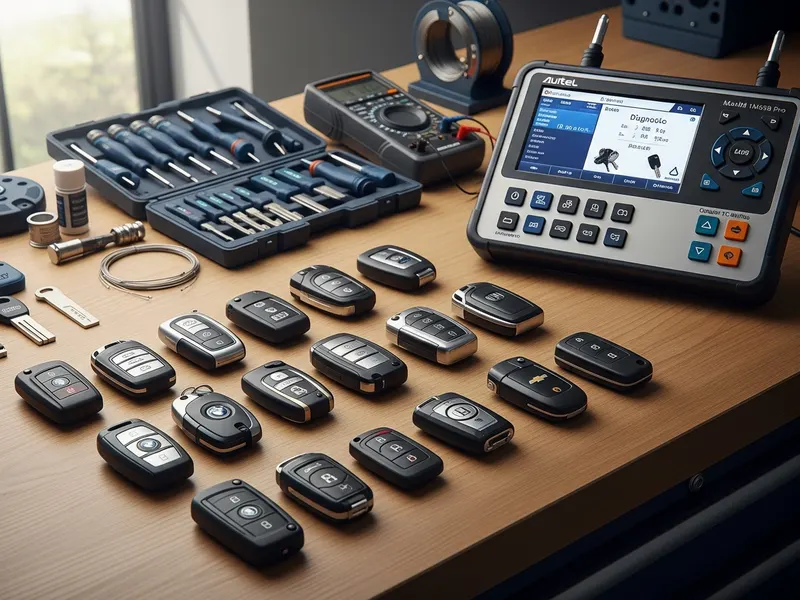
Because the chip has to be recognized by your specific vehicle, a replacement transponder key is a two-part job. It must be cut to match your locks, and it must be programmed so the immobilizer accepts its code. A key that is only cut, like a cheap hardware-store duplicate, will physically fit the ignition and unlock the doors, but the engine will not start because the immobilizer never gets the code it is waiting for. A mobile locksmith carries the equipment to both cut and program keys for most makes and models, and we confirm the right approach by year, make, model, and VIN.
What you can safely check first
If your car cranks but will not start, or if you see a key, lock, or security warning light on the dash, the immobilizer may not be reading your key. First, try your spare key if you have one, since that quickly tells you whether the problem is the key or the car. If the remote buttons have also gone unresponsive, the fob's separate battery may simply be dead even though the transponder chip still works, so a fresh coin-cell battery is worth trying. Your owner's manual describes any backup start method for your model, such as holding the fob in a specific spot.
Mistakes that cost drivers money
The most common and most expensive mistake is treating a cut-only hardware-store copy as your real spare. It feels like a bargain until the day your main key is lost and you discover the cheap copy cannot start the car. Another costly error is buying a random replacement chip or fob online and assuming you can self-program it, which often results in a part that will not pair with your vehicle at all. And the biggest avoidable expense of all is waiting until every key is lost, because an all-keys-lost job requires more time and specialized programming than simply copying a key you still have.
Local context across Palm Beach County
Drivers all over the county rely on transponder keys without ever thinking about them until something goes wrong. Keys vanish into the sand at the beaches up in Jupiter and Juno Beach, get misplaced at the equestrian events out in Wellington, or simply wear out after years of daily commutes along I-95 and Okeechobee Boulevard. The salt air and humidity from the coast through downtown West Palm Beach and down toward Boca Raton are also hard on key contacts and fob electronics over time. Rather than arranging a tow to a dealer across the county, most drivers can have a transponder key cut and programmed right where the car sits.
The chip in your key is quietly protecting your car every single day, and a little knowledge about it goes a long way. The smartest move is to have a properly programmed spare made before you ever need one, which is far cheaper and far less stressful than an emergency replacement. Whether you need a spare or you are starting from no working keys at all, we can help on site for most vehicles. Call (561) 839-9919 anytime, 24/7, licensed and insured.
Frequently Asked Questions
What is a transponder key?
It is a car key with a small electronic chip in the head that sends a unique code to the car's immobilizer. The engine only starts when that code matches.
Does the chip in my key have a battery?
No. The transponder chip draws power from the car's signal, so it never needs a battery. Only a separate remote fob with lock buttons uses its own battery.
Why won't a hardware-store key copy start my car?
A cut-only copy fits the lock but has no programmed chip, so the immobilizer never receives the code it needs. The engine will not start without programming.
Can a locksmith program a transponder key on site?
Yes, for most makes and models. We cut and program the key at your location after confirming the vehicle by year, make, model, and VIN.
What should I do before I lose all my keys?
Have a properly programmed spare made while you still have a working key. It is much cheaper than an all-keys-lost replacement done under pressure.