Keyless push-to-start systems are wonderfully convenient right up until the moment the fob battery dies and the car refuses to acknowledge you exist. You press the start button and nothing happens, the doors will not unlock with a touch, and it feels like you are locked out of your own vehicle. Take a breath, because automakers planned for exactly this situation. Nearly every push-to-start car has a built-in backup method to get you in and get the engine running, even with a completely dead fob.
Why a dead fob feels worse than it is
With a traditional key you always have a physical blade to fall back on, but a push-to-start fob hides that backup, so a dead battery feels like a hard stop. In reality the system is designed with two layers of redundancy: a mechanical key for the door and a passive chip for the engine. Once you know where both are, a dead fob becomes a minor delay rather than a roadside emergency.
Step one: get the door open
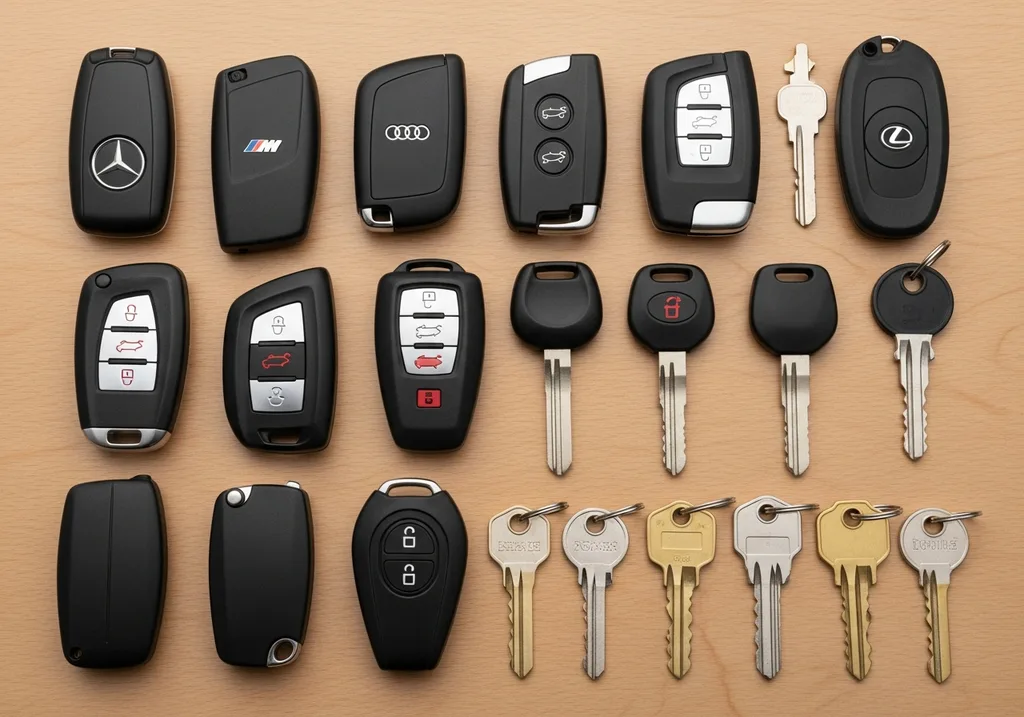
Most keyless fobs contain a small mechanical key that slides or pops out, usually released by a button or latch on the side of the fob. Pull it free and look at the driver's door handle. Many vehicles have a visible lock cylinder, while others hide it under a small cap on the handle that you can pry off gently to reveal the keyhole. Insert the blade and turn to unlock the door manually. If your car has no visible cylinder at all, your owner's manual will show the exact spot, because there is almost always one there.
Step two: start the engine with a dead fob
Here is the part most drivers never learn until they need it. Even with a dead battery, the fob still contains a passive transponder chip that the car can read at very close range. Most vehicles let you start the engine by holding the fob directly against the start button, or by placing it in a specific marked location such as a cupholder, a slot in the console, or the steering column area. Then you press the start button as usual, often while pressing the brake. Your owner's manual lists the precise method and location for your model, since it varies between makes.
Step three: replace the battery soon
Once the car is running, your priority should be a fresh coin-cell battery. These are inexpensive and sold almost everywhere, and the fob usually opens with a coin or small flat tool. Driving on the passive-start workaround indefinitely is risky, because if the chip read ever fails you could be stuck again at a worse time and place.
When to call a locksmith
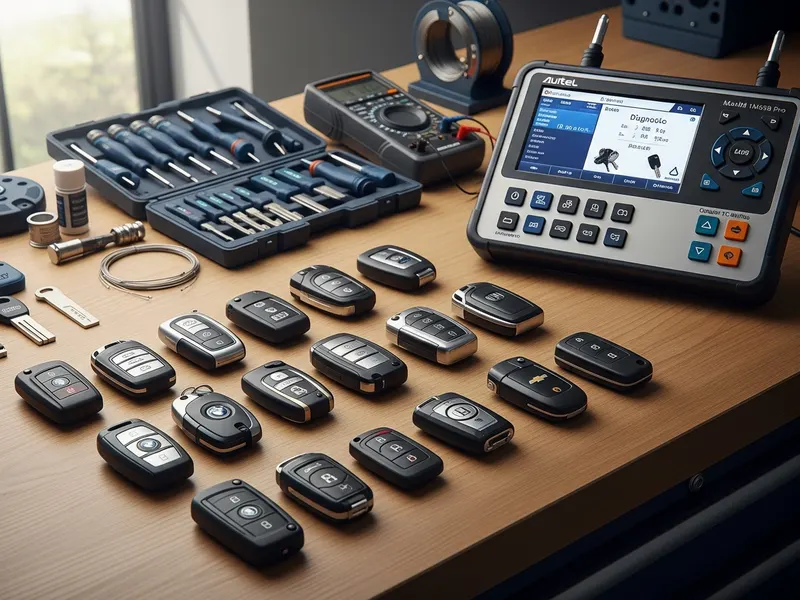
If a fresh battery does not restore normal keyless operation, the fob may have lost its programming or developed an internal fault, and the passive-start trick is masking a deeper issue. A mobile locksmith can test the fob, reprogram it, or supply and program a replacement for most makes and models at your location. This is also the smart time to have a spare fob made if you only have one, because an all-keys-lost situation on a keyless car is far more expensive and time-consuming than making a backup in advance.
What not to do
Do not force the hidden key blade or pry at the door handle with metal tools, because modern handles hide sensors and trim that crack easily. Do not assume the car is dead and call for a tow before you try the passive-start method, since a needless tow costs money and time. And resist the urge to buy the cheapest replacement fob online and expect it to work without programming, because most keyless fobs must be paired to your specific vehicle.
Local conditions that drain fobs faster
Palm Beach County is tough on small batteries. Cars parked in the sun along Clematis Street, in beach lots near the Intracoastal, or in open driveways out in Wellington and Loxahatchee bake all day, and that heat shortens coin-cell life. The salt-air humidity that drifts inland from the coast adds corrosion to the mix, so fobs that ride in gym bags, golf bags, or boat gear tend to fade early. Many residents in gated communities from Jupiter to Boca Raton also rely on the same fob to open community gates, so a dead battery can leave you stranded at the entrance as well as the car. Replacing the battery at the first sign of weak range saves a lot of frustration.
If your push-to-start fob has died and the simple steps have not gotten you back to normal, we can help fast. Call (561) 839-9919 any hour and a licensed, insured mobile locksmith will come to you, test or program your fob, and make a reliable spare so a dead battery never strands you again.
Frequently Asked Questions
Where is the hidden key in a push-to-start fob?
Most fobs have a release button or latch that lets a small mechanical blade slide out. Your owner's manual shows the exact release point for your model.
How do I start the car if the fob is completely dead?
Most cars let you start the engine by holding the fob against the start button or placing it in a marked spot, then pressing start. The manual lists the exact location for your vehicle.
Will driving with a dead fob harm my car?
No, but it is risky because you may not be able to restart if the passive read fails. Replace the coin-cell battery as soon as you can.
Can a locksmith make a spare keyless fob?
Yes. We can program spare or replacement fobs for most push-to-start vehicles at your location, confirming the correct unit by year, make, model, and VIN.
Why did my fob die without warning?
South Florida heat and humidity can drain coin-cell batteries faster than expected. Shrinking range is the usual early warning, but sometimes the fade is quick.